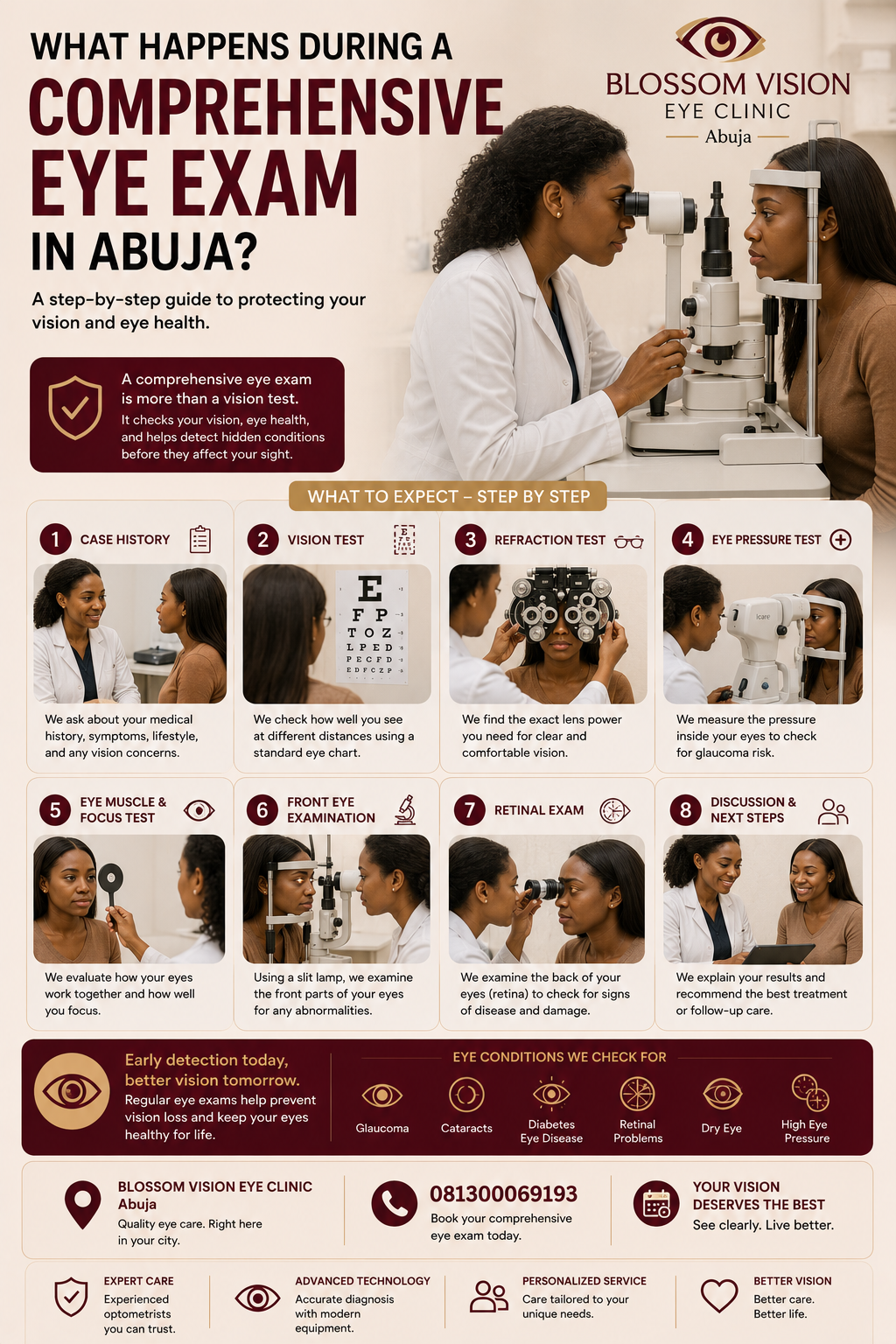
What Happens During a Comprehensive Eye Exam in Abuja? (Step-by-Step Guide)
A comprehensive eye exam is much more than reading letters on a chart. It evaluates your vision, eye health, eye pressure, retina, and checks for hidden conditions such as glaucoma, cataracts, diabetes-related eye disease, and other vision-threatening problems.
A comprehensive eye exam typically includes:
- Medical and vision history
- Visual acuity testing
- Refraction (glasses prescription)
- Eye pressure measurement
- Eye muscle and focusing assessment
- Retinal examination
- Eye health evaluation
- Discussion of findings and treatment plan
Most eye diseases develop silently, which is why regular eye examinations are essential even when your vision appears normal.
Why Comprehensive Eye Exams Matter
Many people in Abuja only visit an eye clinic when they notice blurry vision, headaches, or difficulty reading.
The problem?
Some of the most serious eye conditions show no symptoms in their early stages.
These include:
- Glaucoma
- Diabetic retinopathy
- Hypertensive retinopathy
- Retinal diseases
- Macular degeneration
- Early cataracts
By the time symptoms appear, permanent damage may already have occurred.
A comprehensive eye examination helps detect these conditions before they affect your vision.
Step 1: Medical and Vision History
Every eye exam begins with understanding your health.
Your optometrist may ask:
- Do you have headaches?
- Do your eyes itch, water, or feel dry?
- Do you struggle with night driving?
- Do you have diabetes or hypertension?
- Is there a family history of glaucoma?
- How much screen time do you have daily?
These questions provide important clues that guide further testing.
Step 2: Visual Acuity Testing
This is the part most people recognize.
You will be asked to read letters or symbols from a chart at different distances.
This test measures:
- Distance vision
- Near vision
- Overall visual clarity
However, this is only one small part of a comprehensive eye exam.
Passing the chart test does not necessarily mean your eyes are healthy.
Step 3: Refraction (Determining Your Prescription)
If your vision is blurry, the next step is refraction.
This test determines whether you need:
- Glasses
- Contact lenses
- A prescription update
Your optometrist uses specialized lenses to identify the prescription that provides the clearest vision.
This process helps diagnose:
- Myopia (short-sightedness)
- Hyperopia (long-sightedness)
- Astigmatism
- Presbyopia (age-related reading difficulty)
Step 4: Eye Pressure Testing
One of the most important parts of the examination is measuring intraocular pressure.
Why?
Because glaucoma is one of the leading causes of irreversible blindness in Nigeria.
Many patients with glaucoma:
- Feel no pain
- Notice no symptoms
- Continue seeing normally
Until significant vision loss has already occurred.
Eye pressure testing helps identify people who may be at risk and require further evaluation.
Step 5: Eye Muscle and Focusing Assessment
Your eyes must work together as a team.
During this stage, your optometrist evaluates:
- Eye alignment
- Eye movement
- Focusing ability
- Binocular vision
Problems in these areas can cause:
- Eye strain
- Headaches
- Double vision
- Reading difficulties
- Poor academic performance in children
This assessment is especially important for school-age children and people who spend long hours on digital devices.
Step 6: Examination of the Front of the Eye
Using a microscope called a slit lamp, your optometrist examines:
- Eyelids
- Eyelashes
- Tear film
- Cornea
- Conjunctiva
- Iris
- Lens
This helps detect conditions such as:
- Dry eye disease
- Allergies
- Corneal infections
- Cataracts
- Eye injuries
Many eye problems become visible long before symptoms develop.
Step 7: Retinal Examination
The retina is the light-sensitive tissue at the back of the eye.
A retinal examination allows your optometrist to assess:
- Retina health
- Optic nerve health
- Blood vessels
- Macula
This is one of the most important parts of the eye examination.
Retinal evaluation can reveal signs of:
- Diabetes
- Hypertension
- Glaucoma
- Retinal tears
- Retinal detachment
- Macular disease
In some cases, your eyes may reveal health problems before your doctor diagnoses them elsewhere in the body.
Step 8: Discussion of Results
After completing the examination, your optometrist explains:
- Your diagnosis
- Your prescription
- Any detected eye conditions
- Recommended treatment options
- Follow-up schedule
You should leave the clinic understanding:
- How healthy your eyes are
- Whether you need glasses
- Whether any treatment is required
- When you should return for another examination
How Long Does a Comprehensive Eye Exam Take?
A thorough eye examination usually takes between 30 and 60 minutes, depending on:
- Your symptoms
- Age
- Medical history
- Additional testing required
Be cautious of examinations that seem rushed.
A proper eye exam involves more than simply checking whether you need glasses.
Who Should Have Regular Eye Exams?
You should have routine eye examinations if you:
- Are over 40 years old
- Have diabetes
- Have hypertension
- Have a family history of glaucoma
- Spend long hours on screens
- Wear glasses or contact lenses
- Notice changes in your vision
Even healthy adults should have a comprehensive eye exam at least once every year.
Why Abuja Residents Need Regular Eye Exams
Abuja's environment creates unique challenges for eye health:
- Dust during the dry season
- Increased UV exposure
- Long hours of screen use
- Rising rates of diabetes and hypertension
- Heavy traffic and night driving demands.
These factors make routine eye examinations particularly important for residents of Abuja.
Key Takeaways
- A comprehensive eye exam checks much more than vision
- Many serious eye diseases develop without symptoms
- Early detection can prevent vision loss
- Eye pressure and retinal examinations are critical
- Annual eye examinations are one of the best investments in your long-term eye health
Related Articles
Why Do My Eyes Water When I Read?
Why Do Headlights Blind Me At Night?
Why Are My Eyes Itchy All The Time In Abuja?
Optometrist vs Ophthalmologist: Who Should You See?
How Often Should I Have My Eyes Checked?
Frequently Asked Questions
Is a comprehensive eye exam painful?
No. Most tests are completely painless and non-invasive.
Can an eye exam detect diabetes?
Yes. Changes in the retinal blood vessels may indicate diabetes or diabetic eye disease.
How often should I have an eye exam?
Most adults should have a comprehensive eye examination once every year.
Do I need an eye exam if I can see clearly?
Yes. Many eye diseases develop without affecting vision initially.
How long does an eye exam take?
Most comprehensive examinations take between 30 and 60 minutes.
How much is an eye exam in Abuja?
The cost depends on the clinic and the tests required. Comprehensive eye exams generally provide the most accurate assessment of eye health.
Can an eye exam detect glaucoma?
Yes. Eye pressure testing and optic nerve assessment can help detect glaucoma early.
Do I need glasses after every eye exam?
No. Many patients have healthy eyes and do not require glasses.
Can children have comprehensive eye exams?
Yes. Children should have regular eye examinations to detect vision problems that may affect learning.
Signs You Should Book an Eye Exam Immediately
Book an appointment if you notice:
- Blurry vision
- Frequent headaches
- Difficulty driving at night
- Eye strain
- Double vision
- Frequent prescription changes
- Family history of glaucoma
Don't wait for symptoms. Protect your vision with a comprehensive eye exam today.
Book Your Comprehensive Eye Exam in Abuja now.
📍 Blossom Vision Eye Clinic, Abuja
📞 08130069193